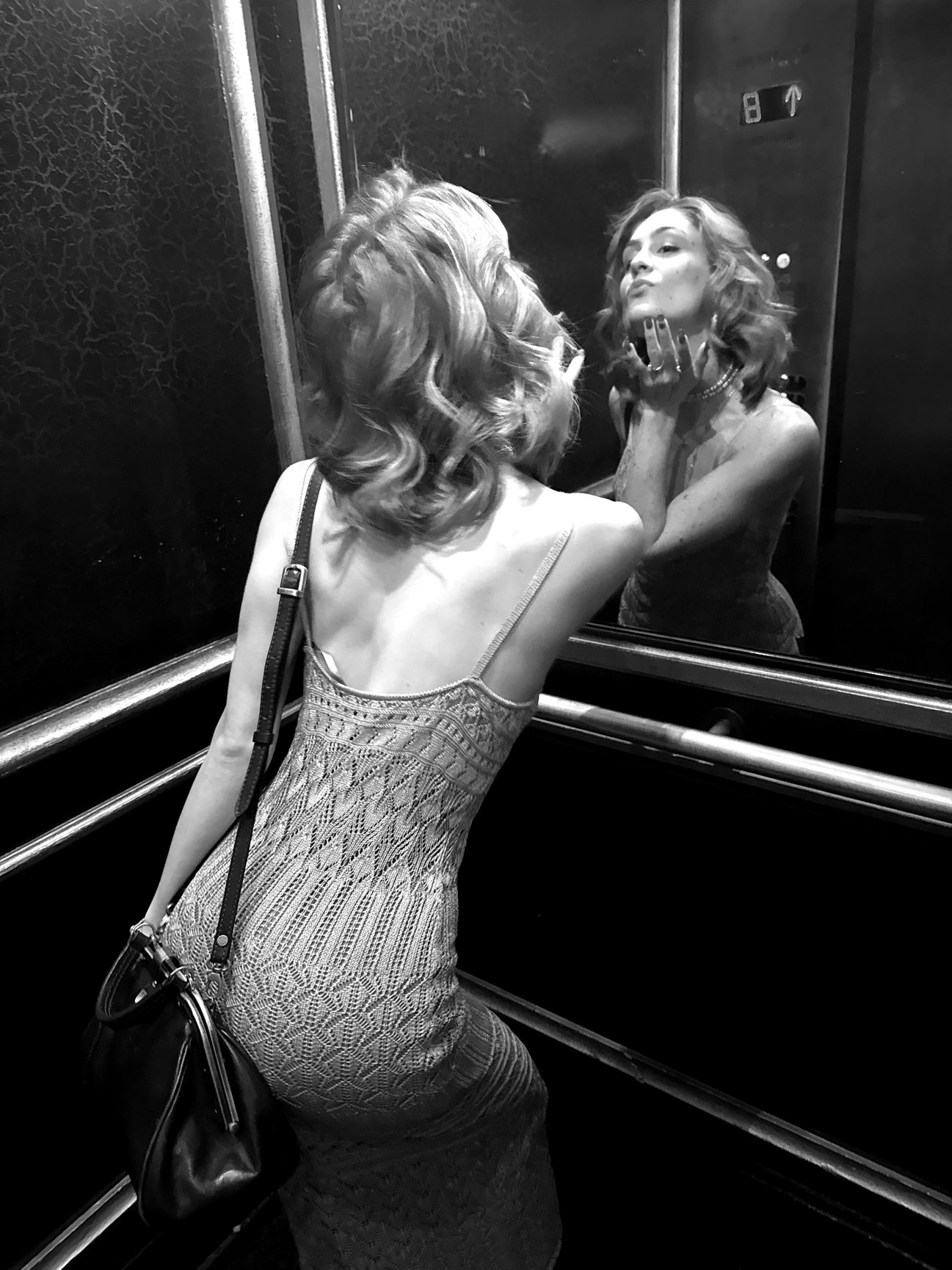
In honor of our angel, Dolly Parton, this episode will remain free ʚїɞ
I have an idea, well let’s not get carried away because often I have several in just an hour. But this idea, I’ve been harping, praising, downvoting, and contemplating the very existence of possibilities of what it could be.
I’ve sent over a pitch deck, along with emails and phone conversations. I have an idea, and I’m testing to see if others may believe in it too.
But that’s not what I want to talk about today. Every time I try to write about something new, I end up circling back to the same friend I’ve had since before I knew what a friend was.
Butterflies.
Butterflies?
Yes, butterflies.
ʚїɞ
I love butterflies. I’m not sure why, or when it started. I grew up as an animal lover. I’d spend my weekends capturing a pet toad, and the weekdays building a makeshift home for it in my closet. Of course, I did all of this without permission — what sort of sensible parent would let their daughter turn their wardrobe into a toad terrarium? Though I never spoke to my parents about my pet toads, though every day when I came home from school, the little home I built between my soccer shorts and tank tops no longer had a toad in it. It was either the fairy toad mother, or my mother.
But I was not just a ‘toad girl,’ I was an animal girl.
I grew up in southern Minnesota, where toads roamed everywhere. They were stuck in our gutters, in our window wells, they swelled the pond down the hill, and they croaked all night long, often louder than the roosters when we woke each morning to the sound and the sun.
There were more toads than people in my town, far more toads than I had friends, and like poetry, there was more freedom in emotion, more safety in the poetry I had found, than in any one person in the town.
I had textbooks — one on dog species, one on cat species, one on mammals, one on amphibians. I remember reading the mammal textbook cover to cover several times. Maybe it’s a similar reason I gravitated toward poetry — it helped me understand myself, and feel less alone. So poetry and animals, perhaps they found me for similar reasons, or more so, perked and stayed in my interest for the right reasons.
To pinpoint when it was that butterflies flew into my favorite, I’m not sure. Perhaps they were around me the entire time; it simply took me till now to realize how important they were to me.
Monarchs loved our farm town. In the spring, they would return, and the fields would rise as the frost scorched off in Minnesota’s incoming summer sun. We had a big tree in the front of the farm, the kind with long branches that made you feel like Tarzan as a child. Across the gravel road was a pond about thirty yards wide. The toads roared and ruled that pond, the fireflies danced above it, and I watched while swinging from the front yard tree.
Fireflies at night, and butterflies during the day. For growing up in seclusion and solitude, I sure was one for escaping into the openness of nothing. I’d sneak out and sit at the top of the hill of the cornfield, where I could see the native reservation’s casino lights making a giant tepee in the sky — the only light pollution for a hundred miles. At night, it was always just me, the stars, the fireflies, and the tepee in the sky.
I couldn’t sleep much as a child, nor still as an adult. I stayed awake, hiding in my closet writing or drawing, or snuck out to sit in the middle of something, owning its own control, like the cornfield or the Tarzan tree.
My little sister sleepwalked a lot, so we had bells on each of the doors. I’d carefully walk down the stairs, placing each foot on the parts I’d memorized not to creak. At the bottom, it’s almost pitch black except for a little light in the kitchen, and the drapes are pushed to the side so I can see the fireflies dancing, telling me to hurry and join them. I’d slide on my boots, lift the bells off the door with two hands, set them on the chair nearby, turn the knob slowly with my ear pressed to catch the noises first, and creak the door open as slowly as I could to drag out the low hymn-screech it had made since Grandma and Pop moved in. Then I’d close it behind me, the toads’ chitter-chatter would fill my ears, the fireflies would dance around my eyes, and the tepee and the stars would shine bright in the sky.
These were my friends of the night.
There’s a certain kind of tree that grows in Minnesota — my favorite. They always grew in clusters; wherever I saw one, there were bound to be at least ten more nearby. They looked like pine trees but weren’t prickly or sappy, with a hollow middle where the soft thistles didn’t grow, so if you snuck under the branches and stood inside near the trunk, you had open ladders on every side. I climbed to the very top, so high there were only a few branches left above my knees, a little flimsy up there, swaying each way the wind blew. Though it was never dangerous — there was always another tree with an equally good ladder a few feet away.
That ladder inside the tree, that was where I went to be with the butterflies. And every day, when the Minnesota sun chose to be kind, you would know exactly where to find me.
Whether it was the toads and the fireflies chatting and lighting up my nights, or the butterflies landing all around me during the day — I never felt alone in complete nature. The sun always rises in Minnesota, but it doesn’t always do its job. There are days, weeks, sometimes months where the sun stares at you without ever giving you a trace of warmth, UV, or serotonin. Perhaps Minnesota raised me to be okay not leaving my home for a few weeks, though in other parts of the world that’s considered a drastic sign for help.
When the sun did choose to be kind, you’d find me in a well with the toads, or at the top of a tree, swinging in the wind with the butterflies.
Today, I tend to be a recluse. Sometimes I need complete silence; I need people not to come up and talk to me; I need to exist around you, but without you.
I find it funny, looking through this lens — I was raised in solitude, and I wanted with every inch of me not to be, but when I finally got to ‘not be’, I became the solitude amongst the chaos.
Because, well, often I feel like a butterfly.
When I was a kid, it was easy to exist, because I hadn’t known what it even was to exist, per se. I craved it more than anything — my town was my cocoon, and I was ready to fly. Ready to become who I always wanted to be, who I felt I was meant to be.
I broke out. I achieved great things. My wings grew in, the beauty learning how to light up in its own way. But like butterflies, flowers, and all other beautiful things that occur naturally, we can’t just exist around them and watch — we swat, we capture, we take, and we envy.
I didn’t know I was a butterfly. But it’s the only thing that seems to make sense.
I have friends, but they live far away, and it’s been the same pattern every time — a colleague or an employee, I leave the job, they reach out, we become friends for life. All of my closest friendships have followed this same shape.
I don’t want to talk about the loneliness you think I’m going to talk about. I want to talk about society’s new loneliness for women. My loneliness. Many of us are the first of our entire lineage to live alone. Our mothers, our grandmothers, and the mothers before them — I’m historically assuming — never lived by themselves.
I remember when I got my first apartment. It overlooked the city, and I dressed it up to look like it was out of a magazine — a girl’s apartment you wanted to be photographed in. That was the goal. It’s a funny thing, to spend so much care making a space beautiful enough to be looked at, and then have almost no one there to look.
I signed that lease just a few weeks into my new job, overseeing a theatre, bar, and restaurant for a hospitality group near Washington, D.C. I was barely out of college, scathed by it really, and I worked through the weekends, through the holidays, and soon made sure to be busy with work on Christmas, and even on my own birthday.
The friends I could have made weren’t off on the days I was, and as a very young female boss, it was easier to maintain my structure at work if I didn’t get close with my staff and managers. To be fair, my own bosses required that separation too.
It continued. At first I didn’t make myself busy on Christmas or my birthday, but after a while, that was the only way I knew how to function. It was easier to have my staff wish me a happy birthday than to sit alone in my photo-ready apartment counting texts on one hand.
I looked around at what I had achieved. I was so young, so successful — I should have been happy. But each day I’d return to my apartment, park on the ground level, and sit idle sometimes for four hours. Down there it was all empty cars, nobody ever coming or going when I was. But it was the mirage of community around me. I’d sit in that lot every single day after work, waiting for the mirage to finally lift me up enough to go inside my photo-ready apartment nobody had ever actually seen.
I should have been content. I was the first of many in our generation to do this. I lived alone; I had a successful job — so many women before me fought and clawed for exactly the privileges I was so incredibly depressed in. I felt guilty, like something was wrong with me, that I shouldn’t feel this way given the new age femininity we’d so honorably achieved.
But I was alone, and there were other reasons for it too. I had my cousin Russell check in on me from time to time; he was taken too soon. I miss him a lot. God rest his soul.
It’s not that I didn’t love what I did — I felt creative, capable, like a real businesswoman. I loved that job more than I can explain. I think the problem was there was nobody outside of work I could explain things to. There are boundaries, lines I couldn’t cross with staff and employees. Over the years, my vocabulary narrowed down to just work, and the most social time I had was with my afternoon barista.
The job had its privileges, but it had deprivations too — working through happy hour, through the weekends, my time off never lining up with the social world outside “the industry.” I was too scared the respect I’d worked hard for would wash away if they saw me two beers in on a Sunday industry night with other managers. But I couldn’t really socialize with them either, so mostly I was just afraid to go.
I hadn’t carried friends with me through college, which — like high school — I unfortunately skipped through rather than lived. I had a hard time socially, believed too easily, felt too much. Friends came and went, and things ended so badly that to avoid a bullying lawsuit they sent me to college early. As soon as I turned 18, I transferred to George Mason University in Northern Virginia, where, typical story, I let the wrong man be my boyfriend — it’s fine, ugh, lesson learned.
After schooling, I was in such a shell. I remember telling myself: the only thing I have control over is my career. This is where I shine — not socially, not at making or keeping friends. So I left school behind with that mindset fully formed: I simply wasn’t meant for friends, or a social life. I believed it for years. Some days, even today, I still struggle with believing otherwise.
I loved my work. I loved training managers, writing the theatre sketches, watching a genuine clock run efficiently across every gear and band. Giving a stable paycheck to a door girl in school, or a manager who’s a single dad — it is so incredibly fulfilling.
But I forgot I was a butterfly, not an ant.
I think a lot of us have forgotten, along the way to achieving freedom, that we are not ants. Ants survive by disappearing into the colony. Butterflies were never built for that — they’re built to be seen, to land somewhere, to be found. I built myself an anthill and then wondered why nothing ever landed on me.
In my own personal effort to reach for freedom, I forgot what else mattered. I was so caught up in being capable, in proving I’m not here for a rich husband — that I am the rich husband — that I closed off every other part of me.
I’m worried I’m not alone. I’m worried more women are doing this.
I’ve had my own particular disadvantages that landed me here, where my only friends are former colleagues who reached out. But I worry others are forgetting how dire a sense of community and socializing is to our fulfillment. I worry that while we chase this new freedom, men and women both are forgetting what makes us humans whole.
It isn’t being alone. Being human is never about being alone. Being human is about sharing — stories, thoughts, resources, emotions. We cannot survive alone; any historian can tell you that as fact.
I still struggle to believe I’m worthy of a social life, of friends, if that’s even meant for me. But as I’ve climbed out from the trenches I built myself, inside a mirage of newfound freedom, I worry others haven’t climbed out and seen it for themselves yet either. I see other cultures on this same path, toward becoming working ants or bees, and as someone who knows how detrimental that can be to your health and sanity, I hope they’re able to see the land they’ve dug around themselves.
But that is society — it will consistently tell us what to do, and whether or not you genuinely care what the world thinks, we all seek it out for advice and ideas anyway. It isn’t just work. We’re told we need one thing to be fulfilled; we identify it, hone in on it, and forget everything else that also makes us whole. I’ve seen it in mothers staying home, in a man who took a job he hates to make ends meet, and I saw it in myself, chasing the freedom those women before me worked so hard for.
We’re still in an age of extremes — in views, looks, fashion, morals. The pendulum swings both ways but never rests in the middle. Though I do see it toning down, see some of us getting exhausted from fighting for one thing, from holding an obsolete extreme, from chasing too much or nothing at all in the name of “the best.”
I was at the bar the other day. An old man sat next to me, roughly seventy-five, probably shouldn’t have had the glass of whiskey in front of him. He asked what I was passionate about, what I did. I told him, and poetry came up. He looked bewildered, straightened his back, and declared, “Now what on earth do you young thing have to talk about in poetry — have you experienced life and the world yet?”
I smiled and said, “Life is a journey of heaven and hell. I’m sure you saw both, equally, by the time you were my age.” He looked down at a bracelet on his wrist — a medical military bracelet, fairly certain it wasn’t his own name written on it — then he tucked it back into his sleeve and said, “You know what, you’re right. But I’m still curious what kind of hell a pretty young thing like you could have seen. That’s essential for poetry, right?”
I laughed again and said, “Not necessarily. I think it’s simply easier for some people to write beautiful poems from places of darkness — easier to portray the emotion effectively when you’re at an extreme, and extremes come easier in darkness. When the emotions aren’t as extreme or shaped in extreme darkness, you have to be more open. More truthful about everything.”
We talked for several more minutes. I shared a few pieces with him — one of happiness, one of love, one of darkness for good measure. It was a beautiful conversation, and I’m always curious why others assume a certain thing about me — some cover they’ve judged before opening the book. People do that with butterflies too — they assume the whole story from the wings and never ask what the cocoon was like.
Which is maybe why last time I let you see inside a cocoon of mine, when I told the world I’d broken up with my boyfriend via a poem.
Strangers weighing in, asking each other, “Is she a cunt for doing this?” The verdict was no — though usually it’s yes at first, until you actually think about who ‘Sheridan’ is.
I do love a clickbait title, but the truth is I really did send him a poem as a breakup message. Throughout that short relationship, I resorted to creative ways of expressing how I felt, because I’m often truly incapable of just saying it out loud. I painted an abstract piece of us during our first fight, and it was through that piece that he finally understood what I was trying to say, and we found our way back to each other. I wrote a poem once from a dark headspace, when he was frustrated trying to help me, and I couldn’t tell him what was even going on — but I could show him, through the poem. Through my art, we were both able to see each other more clearly because of it.
I know breaking up with someone via a poem sounds bad. But when you look at who I am, how I operate, and the moments I’m actually most honest and most vulnerable, doing it that way was the best option I had; it was the most ‘Sheridan’ — whether or not anyone else understands.
A butterfly doesn’t explain itself either; it just changes shape and leaves, and if you were paying attention, you already knew it was coming.
That’s what my poetry is. What my art is. The second any anxiety, shame, or guilt hits — whatever inherited, Christian-shaped emotion was bred into me to keep me from sinning — my throat closes, my voice goes, and art is often the only way I’ve ever been able to communicate anything at all.
I hold everything in my throat chakra. Maybe that’s why I’ve had such an on-and-off relationship with smoking — the second fear or a negative emotion hits my body, my throat closes, and I can’t speak. It’s why I crave solitude: so I can quiet the noise around me, let my voice open back up, and make whatever piece I need to make to get the toad out of my throat.
My life feels like it’s standing at the end of a fork, and everything I’ve said, done, become, is standing at my heels while I shuffle back and forth deciding which of the paths to take. It isn’t fair, though it’s more than fair to be standing here at all — fair, in that I have so many ways to go; unfair, in that everyone around me keeps telling me to turn back, that I already missed my exit a few miles behind.
Whether it’s to not have left the small town, or to have stayed with a previous boyfriend, to have said yes to a proposal when I said no, to settle down, go back, do this, do that.
But I can’t walk backwards. That isn’t what my life is going to be about.
I’ll figure out which path to take. But for now, I’m enjoying standing here, butterfly wings still a little damp from the cocoon, with all my attributes and values looking up at me — finally knowing that I am a butterfly, she’s not just my best friend, and whichever direction I fly, we’ll be okay.
I forgot I was a butterfly for a long time. I think a lot of us do. We build the perfect apartment, the perfect career, the perfect proof that we don’t need anyone — and somewhere in there we forget that a butterfly was never built to be alone in a field. It was built to be looked at, landed near, followed. It was built for company, even if it flies alone.
And if that’s the only friend some of us have some days — a butterfly on the windowsill, a memory of one at the top of a tree — I don’t think that makes us broken. I think it just means we forgot, like I did, that we were never ants.
xo,
Sheridan Guerrette
WhatSheridanSaid.com
Life Behind the Artist: Wed at 9/8C
P.S. The hardcover version of Memoir of the Modern Heroine is updated with the corrected format on my website and Amazon! To all those who ordered the hardcover before this update, your new copy is in the mail (see e-mail) and will be to you shortly at no cost at all!
I love you all and thank you so much for your continued support ♡